Floors take more abuse than almost any other surface in a home. They carry foot traffic, furniture, spills, and daily temperature and humidity changes. Because of that, problems often start quietly and grow for months before anyone notices.
A soft spot near the dishwasher. A slight squeak in the hallway. A gap that was not there last year. These small signs can point to bigger issues underneath.
A flooring inspection helps you understand what is really going on with your floors. This guide explains what it involves, how the process works, what it costs, and when it makes sense to book one.
What Is a Residential Flooring Inspection?
A residential flooring inspection is a detailed check of the floors in a home. An inspector looks at the surface, the materials, the installation, and the conditions around and beneath the floor.
The goal is simple: find out what shape the floors are in and why. That may mean confirming a floor is in good condition, or it may mean uncovering moisture, poor installation, or structural trouble.
Inspections apply to all common floor types, including:
- Hardwood and engineered wood
- Laminate
- Vinyl plank and sheet vinyl
- Tile and stone
- Carpet
Homeowners, buyers, sellers, and landlords all use floor inspection services for different reasons. Some want peace of mind. Others need a written report for a repair claim, a sale, or a renovation plan.
Why Is Flooring Inspection Important?
Floors hide a lot. Damage can sit under a rug, behind furniture, or beneath the surface layer. By the time it shows, repairs are usually bigger and more expensive.
A flooring condition assessment gives you facts instead of guesses. It tells you what needs attention now, what can wait, and what is fine as is.
Identifying Visible and Hidden Floor Damage
Some damage is easy to see. Scratches, cracked tiles, stains, and lifted edges are obvious once you look.
Other problems stay out of sight. Moisture trapped under vinyl, a weak subfloor, or mold beneath carpet padding will not show on the surface. A trained inspector uses tools such as moisture meters to find what the eye cannot.
A thorough floor damage inspection covers both types. That way, nothing important gets missed.
Understanding Flooring Wear and Deterioration
Every floor wears down over time. What matters is whether the wear is normal or a sign of something wrong.
Even fading in a sunny room or light dulling in a busy hallway is expected. Sudden warping, uneven wear, or boards that keep loosening are not. An inspector can tell the difference and explain what is causing it, whether that is age, use, cleaning habits, or a hidden defect.
Preventing Costly Flooring Problems
Catching an issue early is almost always cheaper. A small leak found in month one may only need a dry out and a few replaced planks. The same leak found a year later can mean a new subfloor and a full replacement.
Regular checks also help you plan. If a floor is nearing the end of its life, you can budget for it instead of facing a surprise expense.
What Does a Floor Inspection Include?
The exact scope depends on the floor type and the reason for the inspection. Most include the following:
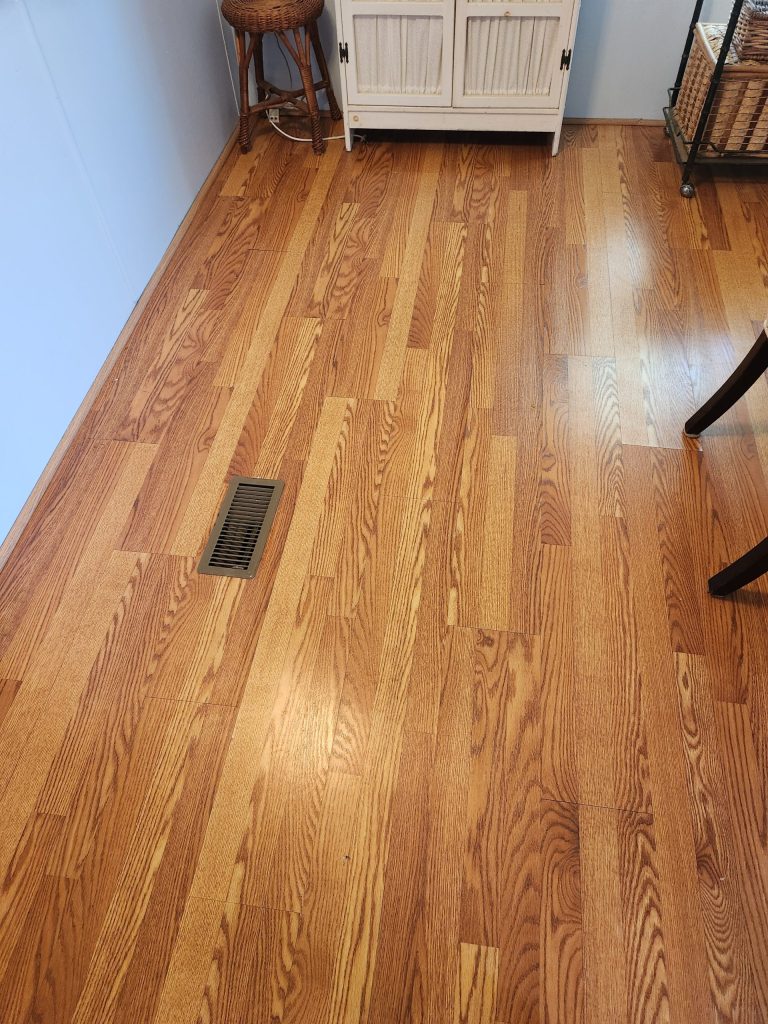
- Surface review: scratches, dents, stains, cupping, buckling, gaps, and finish wear
- Moisture testing: readings taken from the floor and, when needed, the subfloor or slab
- Level and flatness checks: dips, humps, and slopes that affect comfort and installation
- Subfloor review: access is limited in some homes, but crawl spaces and basements offer clues
- Installation quality: spacing, fastening, transitions, and adhesive or underlayment use
- Environmental factors: humidity, sunlight, plumbing, and drainage near the floor
A professional floor inspection ends with documentation. That usually means notes, measurements, photos, and a summary of findings.
How the Flooring Inspection Process Works
Knowing what to expect makes the visit less stressful. Most inspections follow a clear order.
Initial Visual Inspection and Condition Assessment
The inspector begins with a walk through each room. They look at the floor from different angles and under different light. Low light across the surface often shows dips, ridges, and lifted edges that are hard to spot otherwise.
They also ask questions. When was the floor installed? Have there been leaks or floods? Do you hear squeaks or feel soft areas? Your answers help guide the rest of the visit.
Checking Flooring Materials and Installation
Next comes a closer look at the materials and how they were put down. The inspector checks whether the product suits the room, whether it was installed to manufacturer guidelines, and whether expansion gaps were left where needed.
Moisture readings are taken at this stage. For wood floors, this is especially important, since excess moisture leads to cupping, gaps, and buckling. For tile, the inspector may tap the surface to find hollow spots that suggest poor bonding.
Documenting Damage and Inspection Findings
Good inspectors document everything. They record measurements, take photos, and note the location of each issue. This creates a clear record you can use for repairs, insurance, or a discussion with a contractor or seller.
A useful report explains what was found, the likely cause, and the recommended next step. If you do not understand something, ask. A trustworthy inspector will walk you through it.
Common Flooring Problems Inspectors Look For
Certain issues appear again and again. Here are some of the most common:
- Moisture damage: swelling, staining, mold, or a musty smell
- Cupping and crowning: edges of wood boards rising or centers lifting
- Buckling: floors lifting off the subfloor, often from excess moisture or lack of expansion space
- Gaps between boards: normal in small amounts, but large or growing gaps need review
- Squeaks and loose boards: often caused by subfloor movement or poor fastening
- Cracked or hollow tile: usually linked to a shifting base or weak adhesive
- Uneven surfaces: dips or humps that suggest structural or subfloor problems
- Delamination or peeling: layers separating in laminate and engineered products
- Pest damage: termites and other insects can weaken wood from below
Some of these are cosmetic. Others point to problems that affect safety or structure. That is why an experienced flooring inspection matters. It sorts minor annoyances from real concerns.
Understanding Flooring Inspection Costs
Prices vary by location, home size, floor type, and the inspector’s expertise. The figures below are general estimates in US dollars and should be treated as a rough guide.
- Basic flooring check as part of a home inspection: often included or a small add on
- Standalone residential flooring inspection: roughly $150 to $500
- Specialized wood flooring inspection with moisture testing: often $250 to $600 or more
- Large homes or complex cases: may be quoted at an hourly rate, commonly $75 to $200 per hour
- Detailed written report for insurance or legal use: may cost extra
Several things can raise or lower the price:
- Size of the home and number of rooms
- Type of flooring and number of materials
- Need for moisture or slab testing
- Travel distance
- Depth of the written report
Ask what the fee covers before you book. A clear quote should list the scope, the tests included, and what you will receive at the end. Comparing quotes from local flooring inspection providers is a smart way to find fair pricing.
When Should You Schedule a Flooring Inspection?
You do not need an inspection every year, but certain moments make one worthwhile.
- Before buying a home: floors are expensive to fix, and problems are easy to overlook during a tour.
- After a leak, flood, or plumbing failure: moisture damage can spread quickly.
- When you notice warning signs: warping, soft spots, gaps, odd smells, or persistent squeaks.
- After new flooring is installed: a check can confirm the work was done properly.
- Before selling: knowing the condition of your floors helps you set expectations and avoid surprises.
- Before renovation: it helps you decide what to keep, repair, or replace.
- When a warranty or dispute is involved: an independent report gives you solid evidence.
If your floors are older, a check every few years can also help you track their condition.
DIY Flooring Checks vs. Professional Floor Inspection
There is a lot you can do on your own. Regular home checks help you catch early signs and keep small issues from growing.
Simple DIY checks include:
- Walk each room and listen for squeaks or creaks
- Look for gaps, lifted edges, or color changes
- Press gently on suspicious areas to feel for softness
- Check near sinks, appliances, and exterior doors for moisture signs
- Notice any musty odors
These steps are useful, but they have limits. You cannot measure hidden moisture without tools, and you may not know if a pattern of wear is normal or a warning sign.
A professional floor inspection brings training, equipment, and an unbiased eye. It is the better choice when you see signs of damage, when money is involved, or when you need a formal report. A good rule is to use DIY checks for routine care and call an expert when something seems off.
What Happens After a Flooring Inspection?
Once the inspection is done, you will receive a report or summary. This is where the real value begins.
Review the findings carefully. Most reports sort issues by urgency, such as immediate concerns, items to monitor, and cosmetic notes. If you are unsure what something means, ask the inspector to explain it.
From there, your next steps may include:
- Repairs: fixing loose boards, replacing damaged sections, or resealing surfaces
- Moisture correction: repairing leaks, improving ventilation, or adding a vapor barrier
- Further evaluation: bringing in a plumber, structural engineer, or specialist if needed
- Getting contractor quotes: using the report to get accurate estimates
- Monitoring: rechecking certain areas after a few months
- Negotiating or filing claims: using the report during a sale or insurance process
Keep the report in a safe place. It is useful for future repairs, resale, and warranty questions.
Final Thoughts
Your floors are one of the largest investments in your home, and they deserve regular attention. A flooring inspection gives you a clear, factual picture of their condition and helps you avoid costly surprises.
Whether you are buying, repairing, or simply want peace of mind, take the time to understand what is under your feet. Early answers usually lead to simpler and cheaper solutions.