A kitchen backsplash might seem like a small detail, but it can completely change the character of a kitchen. It is one of those features that sits right at eye level, so it ends up doing a lot of visual work, whether you notice it consciously or not. If you are trying to figure out which direction to go, this guide walks through different backsplash ideas based on kitchen style, along with practical things to consider before making a decision.
How to Choose the Right Kitchen Backsplash
Picking a kitchen backsplash is not just about finding a tile you like. It needs to work with the rest of your kitchen, hold up to daily use, and fit realistically within your budget.
Matching the Backsplash With Your Kitchen Style
Your backsplash should feel like it belongs with the rest of the kitchen, not like it was added as an afterthought. A sleek modern kitchen calls for very different choices than a cozy farmhouse space, even if both use tile.
Before choosing anything, it helps to look at your cabinets, countertops, and flooring together. The backsplash should complement these elements rather than compete with them. If your countertops already have a lot of pattern or movement, a simpler backsplash usually works better, and vice versa.
Considering Color, Texture, and Maintenance
Beyond style, there are a few practical factors worth thinking through:
- How much contrast you want between the backsplash and countertops
- Whether a textured tile fits your cleaning habits, since texture can trap grease
- How the color will hold up over time, especially in a lot of natural light
- Grout color and how visible stains might be over the years
Light grout, for example, looks great at first but can be harder to keep clean in a busy kitchen. These small details matter more than people expect once the kitchen is in daily use.
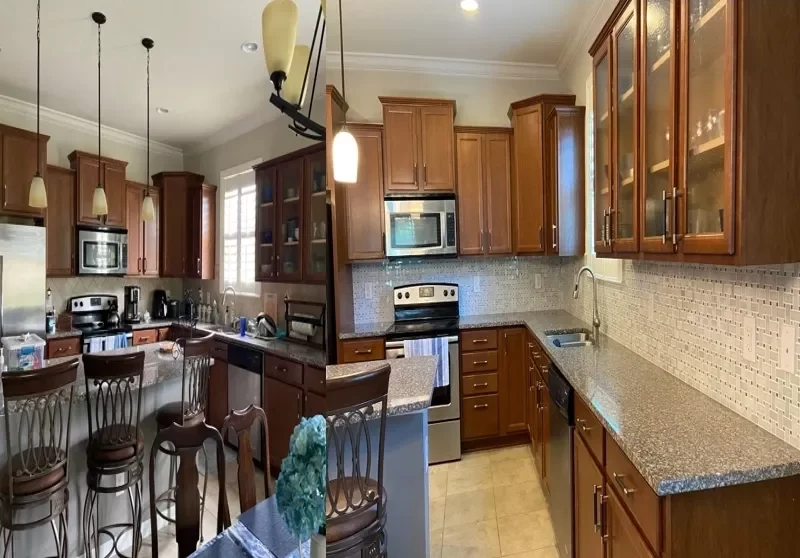
Modern Kitchen Backsplash Designs
Modern kitchens tend to favor clean lines and a sense of openness, and the backsplash usually follows that same philosophy.
Sleek Tile and Minimalist Options
For a modern kitchen backsplash, simplicity often wins. Large format tiles with minimal grout lines create a clean, uninterrupted look that feels current and low maintenance.
Some popular minimalist choices include:
- Large porcelain tiles in neutral tones
- Glossy subway tiles arranged in a simple pattern
- Solid slab backsplashes that match the countertop material
- Glass tiles for a subtle reflective finish
These options tend to work well because they let other design elements, like statement lighting or cabinetry, stand out without visual competition.
Bold Patterns for Contemporary Kitchens
Not every modern kitchen has to stick to minimalism. Contemporary spaces sometimes lean into bold patterns as a way to add personality without overwhelming the whole room.
Geometric tile designs, mixed material combinations, or a bold color against otherwise neutral cabinetry can all work well here. The key is keeping the rest of the kitchen relatively simple so the backsplash has room to stand out as a feature rather than clutter.
Classic Kitchen Backsplash Ideas
Classic kitchens are all about timeless choices that will not feel dated in a few years. This style tends to favor balance over bold statements.
Some backsplash tile designs that suit a classic kitchen include:
- White or cream subway tile in a traditional brick pattern
- Natural stone tiles like marble or travertine
- Simple mosaic patterns in soft, neutral tones
- Beadboard style tile for added texture
Classic backsplashes usually rely on subtle detail rather than bold color, which is part of why they tend to age so well compared to more trend driven choices.
Farmhouse Kitchen Backsplash Ideas
Farmhouse kitchens are all about warmth and a lived in, welcoming feel. The backsplash here often plays a big role in setting that tone.
Popular farmhouse backsplash choices include:
- Classic white subway tile with contrasting dark grout
- Brick style tile for a rustic, textured look
- Beadboard paneling combined with small accent tile
- Handmade looking tile with slight variation in tone
Farmhouse style often benefits from a slightly imperfect, handcrafted look rather than something too polished. Small variations in tile color or texture actually add to the charm rather than taking away from it.
Traditional Kitchen Wall Tiles and Designs
Traditional kitchens usually embrace more detail and warmth compared to modern spaces, while still keeping things elegant.
Some traditional kitchen wall tile options include:
- Intricate mosaic patterns in warm tones
- Classic hexagon tiles for subtle visual interest
- Decorative tile borders or accent strips
- Natural stone with visible veining for texture
These designs often work best when paired with warmer wood tones and detailed cabinetry, since traditional kitchens tend to layer texture and detail throughout the space rather than relying on one standout feature.
Creative Backsplash Tile Designs to Consider
If you want your kitchen backsplash to feel more like a design statement, there are plenty of creative directions worth exploring.
A few standout ideas include:
- Herringbone tile patterns for added movement
- Two tone backsplashes that transition between colors
- Vertical stacked tile instead of the traditional horizontal layout
- Mixing two complementary materials, like tile and wood accents
These creative options work particularly well in kitchens that already have a fairly neutral base, since the backsplash can become the main visual focus without clashing with other elements.
Choosing the Right Backsplash Materials
Material choice affects both appearance and how well your backsplash holds up over time, especially in an area constantly exposed to heat, grease, and moisture.
Common backsplash materials include:
- Ceramic tile, which is budget friendly and available in countless styles
- Porcelain tile, known for durability and low maintenance
- Natural stone, which offers a unique look but often needs sealing
- Glass tile, which adds a reflective quality but can show smudges easily
- Metal accents, often used for a modern or industrial touch
When choosing materials, it helps to think beyond just appearance. A busy kitchen with a lot of cooking activity will benefit from materials that are easy to wipe down, while a lower use kitchen has more flexibility for delicate finishes.
What to Know About Backsplash Installation
Backsplash installation might look simple, but there are a few things worth understanding before starting the project.
Here is what typically goes into the process:
- Preparing the wall surface, including cleaning and repairing any damage
- Measuring and planning tile layout before any cutting begins
- Installing tile with proper spacing for grout lines
- Applying grout and allowing adequate curing time
- Sealing certain materials, like natural stone, after installation
While smaller backsplash projects are sometimes manageable as a do it yourself task, more intricate patterns or premium materials like natural stone often benefit from professional installation. Mistakes during tile cutting or spacing can be difficult to fix once grout is applied, so it is worth being realistic about your comfort level before starting.